Showing posts with label maria montessori. Show all posts

Monday, November 26, 2012

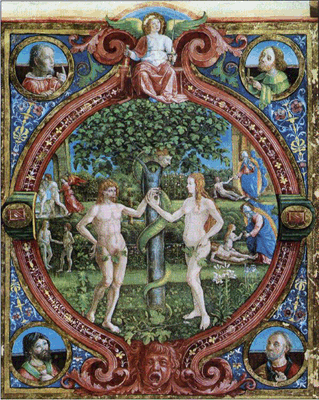
Montessori and Original Sin

This blog gets an astonishing number of Google search hits for "Montessori original sin", so as I typed something up for another blog, I thought I would also post it here. It won't post there until Friday, so I find it amusing that the re-print will show here first ;)


One day, I gathered all my notes to write something about Montessori and Catholicism - specifically Original Sin, since this seems to be a huge sticking point - if Montessori sees only the good in a child, what about Original Sin? And what about "breaking the will"? And how could we dare just "follow the child" because their errant ways will only lead to more errant ways if they have complete freedom!

Well, besides issues of the balance of freedom and responsibility which is inherent in all properly Montessori environments, and the fact that we follow the child only within a prepared environment full of only good choices, I might mention that Montessori emphasizes time and again that when once a negative action or behavior shows itself we nip in the bud - no warnings, no 1-2-3-Magic, no "reasoning" with the 3 year old. But no strict harsh punishments either - we simply stop the behavior and move on. Don't LET those bad habits develop! As the child ages, more reasoning can occur, but by then, the child has been formed in many good habits and the negative things that come up can be dealt with as they happen. Anyone who says that a young child cannot then possibly reveal anything beautiful and holy to us adults, is not obeying the Lord's words, "Let the little children come to me, for heaven belongs to such as them." Hm. Original Sin. Yet heaven belongs to the children, not to adults.

But someone else has said all of this so much better than I could! In googling to find more information and supportive documentation, I found the following site (please visit to read the full article) and I LOVE this paragraph in particular:
http://www.catholic.net/index.php?option=dedestaca&id=3541


Montessori held and applied the Catholic teaching that man was not completely corrupt with the Fall. She said that "in spite of the moral disorder brought about by original sin, there still remains in human nature a great potentiality for goodness." Montessori used the analogy of wheat in the field to make a point about the natural goodness latent in all children. (51) Inferior wheat plant can grow in the fields without cultivation. Destroying them does not guarantee a good harvest. If the good wheat is to grow it must be cultivated and if it is, the inferior wheat seed will not be able to grow. Montessori says: "The key to the problem is, therefore, not to destroy evil but to cultivate good." (53) Thus allowing the roots of good to sprout in the child´s soul.


And there are all of her own writings - if you read them in full context, they explain themselves! Be sure to look for older publications as somewhere in the 60s, many of her books were re-printed with huge religious sections removed. So newer printings have been heavily secularized. 

........................................................

And then I found these: 

To ignore the child’s spiritual nature is to ignore the very essence and purpose of education.
It is important, in this light, to make Dr. Montessori’s understanding of the nature of the child clear.  She considered the child to be good, but broken.  The child is good in that he is created to be good, and broken in that he is subject to the effects of Original Sin – as St. Paul lamented in his own behavior - not doing the things he wants to do and doing the things he does not want to do.  Her method, she believed, removed many of the obstacles that result in frustration which causes children to lose focus on learning and therefore display ‘broken’ behavior.  By freeing the child from these frustrating obstacles, the child becomes able to develop naturally and normally as God had planned.  This process she called ‘normalization’.
 “Experience has shown that normalization causes the disappearance of many childish traits, not only those which are considered to be defects but also others which are generally thought to be virtues...  The disappearance of these childish characteristics shows that the true nature of a child has hitherto not been understood.  The universality of this fact is striking, but not entirely new since from the earliest times a twofold nature has been recognized in man.  The first was given him at the time of his creation.  The second came as a consequence of his first sin, a violation of God’s law.  Because of the fall, man was deprived of the blessings of his earlier state and left to the mercy of his surroundings and the illusions of his own mind.  This doctrine of original sin can help us understand what happens to a child.”(3)

(an article about the development of her spirituality)
Montessori in 1948 is reported to have lectured in London where she stated:
I see it-this Original Sin-who would not see a thing so evident? In the depths of the human soul is the possibility of continuous decadence…In fact, there are innate tendencies in man's soul which lead to maladies of the spirit sometimes even unknown to ourselves, just as the germs of disease may work silently, and unknown. This is the death of the spirit which brings insensibility with it. These tendencies come from the soul itself and not from the environment

Monday, October 1, 2012

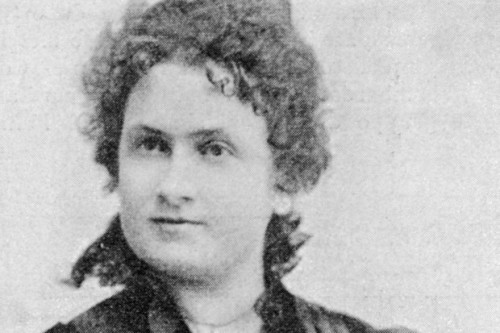
Life of Dr. Maria Montessori: Essentials

One of today's talks was on the essentials of Dr. Montessori's life - who was she, how she discovered, and what she discovered.

What is essential to share in a formation course, getting to the point without dwelling for just too long. 


The whole talk left me holding back tears - tears that most people in the room would not have understood. The second reason was one that could be announced publicly and was an essential point to the mention. The first reason is something that I myself see, is very personal for me, and is perhaps not as deeply understood by most. 


The second half of the talk, it was discussed for a bit that academic Montessori has lost its inherent spirituality; that Montessori's books that have been re-printed are *substantially* shorter than the originals because editors have removed religious and spiritual references and "modernized" something that never should need modernizing!  

All I could think of was the painful experience that was AMI elementary training. Persecution for being not only involved in Catechesis of the Good Sheperd, but specifically a Catholic to boot (and boot they did!) -- but also a homeschooler. I do not think that just one of these facts alone would have caused the treatment I received, but the combination of the three and the fact that I was quietly holding my faith without angst against anyone else made the trainers LIVID. 

Yes, I cried today. It is time to admit the truth. I am not pressing a discrimination lawsuit against AMI or the elementary training center I attended, although I could have - and perhaps still could. I am not going to. But the discrimination against CGS, Catholicism, spirituality of Dr. Montessori, and the Christian faith in general has GOT. TO. STOP. 

Dr. Maria Montessori was Catholic. Plain and simple. My elementary Montessori trainers *apologized* for that! Repeatedly! Why not just respect her beliefs and move on? Same as we are supposed to be respecting everyone's beliefs in this world of "tolerance"? So, when they have all sorts of suggestions for adapting the Story of God With No Hands, I turned in the original version with only two modifications: I created an aura around not even the sun could see the changes taking place on the earth so a veil of clouds was drawn over the earth (rather than it being a "shame" thing, which leaving the shame part could have actually related back to original sin... now I think about it more... but I'll keep my "mysterious changes"); and I did change references to "millions of years" and references to immense passages of time to "in obeying God's laws." My reasons are mine alone and I expected they would be respected on equal footing of those whose modifications included references to "powers" instead of "angels" and others. 

Nope. I was ripped apart in my elementary Montessori training for mostly keeping the original story - because it was too Christian. Too Catholic. And that was only the beginning. 


But the first reason I cried in the formation leaders course today? Was it sadness? Joy? Deep appreciation? Or just the intense feelings that come from facing a reality much bigger than I? 

100 years ago, a young physician gave up her child as an infant so that she could embark on this great discovery that would change the world --- she sacrificed her motherhood to bring something precious to mothers everywhere. 

TODAY, I embrace her discoveries and see them in the development of my own precious child, that I KEPT - that I had a choice to raise myself or place for adoption. The same choice SHE faced. And I can choose a different path - a choice she never had. 

*I* get the best of both worlds. 
And she did not have her son by her side until he was 15 years old. I do not need to face the pain of that separation. My son is with me every day, from birth until today. 

My 8 year old son told me this past Friday that he is happy he homeschools. Why? Is it because he gets to play with his Legos longer than most boys? Read as many books as he can cram into a day? Study The Hobbit in an online course with my favorite college literature professor? Adjust our sleeping schedule later so we can watch the night sky every - single - night!? Is it because of the great Montessori method we follow that allows lots and lots of exploration time while covering all the necessaries and that totally respects him as a person and his ongoing development !? 

NO. He is happy he homeschools --- because he gets to snuggle with Mama all day, every day. 


Maria Montessori sacrificed. I don't have to. She was made a stronger person, with her strong passion for her discoveries because of what she gave up to make it happen. She KNEW something wonderful was there, and she made a sacrifice - one I could never have made. She spent every moment separated from her son making it worth it - and then he joined her in her work only when he was 15 years old. 

She didn't get to snuggle with her son every day for those 15 years.

And I get to keep my son with me. All day. Every day. 


Thank you, Maria Montessori!


UPDATED 2/7/2014
My first reason for tears is for HER - for the pain she endured during those years without her son. And for me, because I cannot imagine how I could have borne that pain, knowing I never have to. I feel for her - I feel for me. I understand her on a level very few can.

The second reason for my tears is the loss of spirituality - so much so that while my academic elementary Montessori trainers apologized for Montessori's Catholicism, yet Catholics think she was a humanist and not even remotely Catholic. (see comments below and in the post on "Montessori and Original Sin" on this confusion)

Such pain - such division - over a woman who simply presented us with the child as God sees him.